
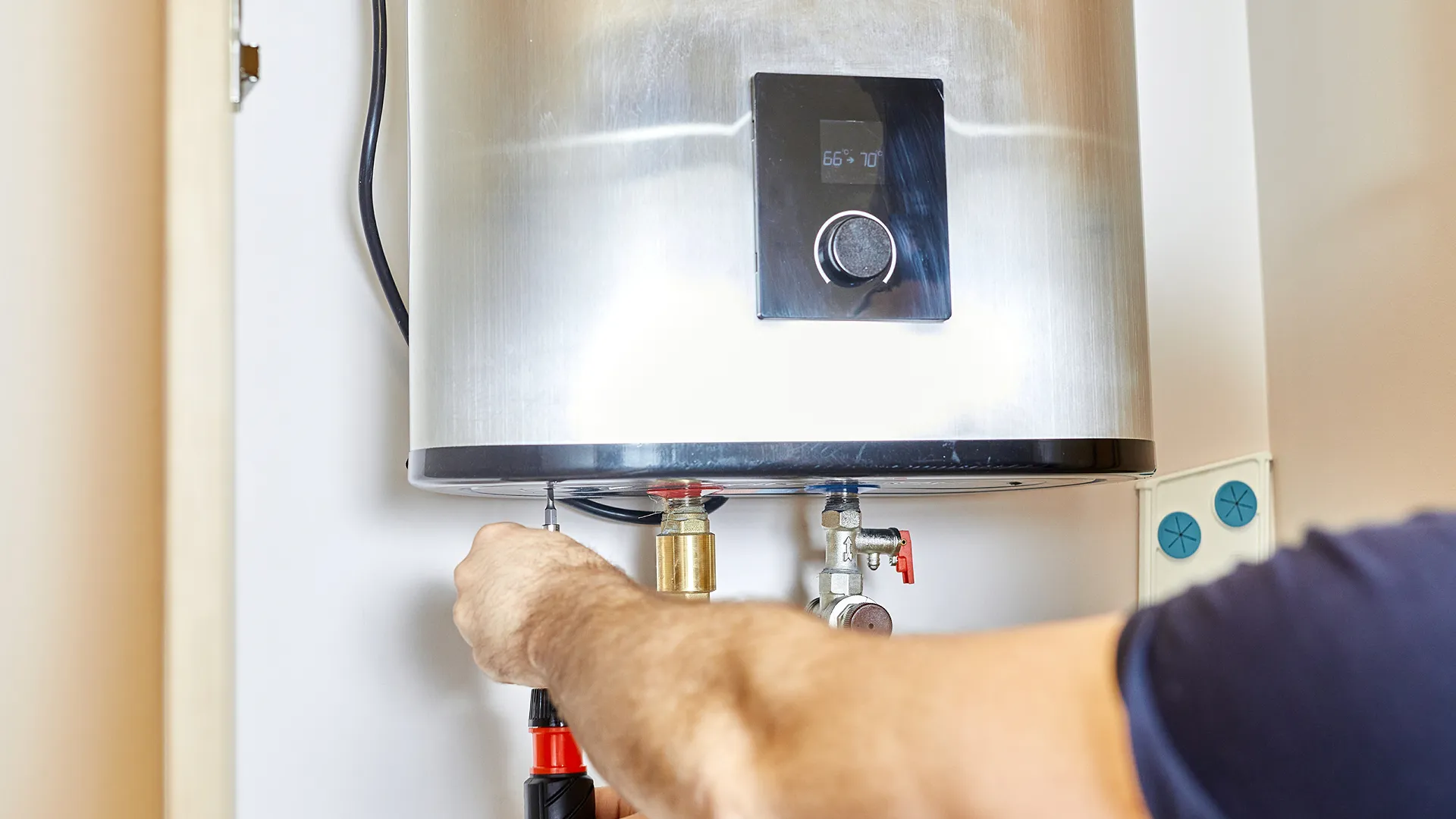
A sharp pop from a tank water heater while it heats often points to sediment or mineral buildup, but sound alone cannot prove the cause. If you also see a leak, smell gas, or lose hot water, skip the flush idea and get the unit checked.
Dave Passey Plumbing serves homeowners in South Jordan, Utah, and its water heater repair page specifically lists unusual popping and rumbling among the problems it evaluates.
This guide helps you distinguish a routine maintenance question from a stop-and-call problem. It does not substitute for your heater’s model-specific manual. A safe flush means knowing the exact unit, how its heat source is shut down, where hot water can drain, and how to confirm the tank is full before reheating. If any part is uncertain, ask a plumber to do it.
What Does the Sound Tell You?
| What You Notice | Possible Explanation | Sensible Next Move |
| Popping or low rumbling as a storage tank heats | Sediment or mineral deposits may be present | Check the model manual and service history; ask whether flushing is appropriate |
| A brief sound during startup or shutdown, with no other symptom | Normal operating or expansion noises are possible, but cannot be identified by sound alone | Note when it occurs and compare it with the manual |
| Popping plus reduced hot water or inconsistent temperature | Deposits or another heating problem may need diagnosis | Arrange an inspection rather than assuming a flush will fix it |
| Sound with water beneath the tank, an active leak, or relief-pipe discharge | A leak or pressure-related fault may be involved | Do not open or plug a valve; call for service promptly |
| Gas odor near any gas appliance | Possible gas hazard, not a sediment diagnosis | Leave the area and contact the gas utility or emergency services from a safe place |
A. O. Smith’s water heater maintenance guide explains that minerals and other material can collect in a tank and that the needed maintenance depends on heater type and model. It also cautions that hot water can scald and that an electric heater must be full before power is restored. Those are reasons not to turn an internet flush checklist into instructions for an unidentified unit.
Why Does a Tank Water Heater Pop?
Sediment settles in a storage tank over time. A. O. Smith’s guide to water heater noises explains that bubbles pushing through mineral deposits can make a popping sound; it distinguishes rumbling, humming, and whistling as other patterns.
That is a plausible explanation, not a remote diagnosis of your tank. Its maintenance guidance connects mineral buildup with tank maintenance and reduced efficiency; a technician still needs to rule out other faults.
Hardness matters because water with more dissolved minerals offers more material for scale. That does not mean every South Jordan home has the same water or that a softener is automatically needed.
If mineral deposits are recurring, ask about the actual water conditions and the options described on Dave Passey Plumbing’s water treatment page. Do not buy treatment solely from the noise.
The anode rod is a different component. It helps protect a steel tank against corrosion and can wear with time. It is worth reviewing during maintenance, but a popping sound by itself does not establish that the rod has failed. Its inspection involves opening the tank assembly and is better left to a qualified person if you lack the correct model instructions and tools.
Safety First: What Should You Check Before Any Flush?
Do not begin draining a heater that is leaking, has damaged controls or wiring, has a suspect gas connection, or has a valve you cannot identify. Hot water can burn skin, and an incorrect restart can damage an electric heating element. If you smell gas, leave without operating nearby switches or trying to relight the heater; call the gas utility or emergency services from outside.
Before considering any maintenance, read the label for the model number and obtain that model’s manual. Determine whether it is gas, electric, heat-pump, or tankless. Look for standing water, visible corrosion, a dripping relief discharge, and whether the sound happens only during a heating cycle.
These are observations you can share with a technician, not an invitation to disassemble the heater.
For a tank heater, the manufacturer’s procedure controls the order for isolating the heat source, cooling water, draining to a safe location, refilling, purging air, and restoring service. Gas and electric shutdowns are not interchangeable.
A. O. Smith warns to let water cool before draining and to ensure the tank is completely full before turning it back on, particularly with electric elements. Do not operate the temperature-and-pressure relief valve merely to diagnose a noise or cap its discharge line.
Can You Flush the Tank Yourself?
Possibly, if the model manual explicitly covers homeowner flushing, the unit is sound, and you can follow every safety and restart requirement. But this article cannot certify that your drain valve will open and reseal, that a hose can carry hot water safely, or that sediment has not clogged the outlet. If you cannot confirm those conditions, a professional flush is a better choice.
A safe planning checklist, not a valve-by-valve procedure:
- Match the model number to the manufacturer’s current manual and read its maintenance warnings.
- Identify the fuel or power source and the manual’s shutdown and restart requirements. Do not remove electrical covers or work on gas fittings.
- Identify a safe discharge route for hot water and protect people and finishes from scalds or flooding.
- Check whether the drain valve appears sound. If it leaks, is stuck, or does not flow, stop and seek service rather than forcing it.
- Confirm the manual’s method for refilling and purging air before restoring heat. Never energize an electric heater with an empty or partly filled tank.
A. O. Smith notes that hard-water conditions may require more frequent flushing, but says the exact interval depends on type and model and to defer to the manufacturer’s handbook. A plumbing maintenance visit can also address the drain valve and tank condition before someone opens it. A flush may remove loose deposits; it is not a cure for a leaking tank, damaged element, faulty control, or worn-out component.
Tankless units need a different decision. They do not have a storage tank to flush in the same way, though many require descaling under model-specific instructions. If your sound comes from a tankless water heater, do not apply a storage-tank flush guide to it.
When Should You Choose Repair Rather Than Another Flush?
Call for an inspection if the popping persists after appropriate maintenance, grows louder, or comes with unreliable hot water. Ask the technician to identify the sound’s source, examine the tank and connections, and explain what the manufacturer recommends for the specific model. A good diagnosis separates a maintenance issue from a repair or replacement decision.
Water pooling at the tank base deserves prompt attention because a tank leak cannot be repaired by flushing sediment. If the relief discharge is dripping, do not plug it or assume a new valve is the only answer; pressure or thermal expansion can be involved, as the manufacturer’s guide explains. Have a professional evaluate the cause.
The price depends on the model, access, valve condition, whether flushing is feasible, and whether a separate repair is needed. Request a written estimate that separates inspection, maintenance, and parts.
Do not approve replacement on noise alone if the tank is otherwise serviceable; likewise, do not keep paying for flushing when a confirmed leak or failed component calls for a different answer.
Frequently Asked Questions
Is Popping Always a Sign My Water Heater Is Failing?
No. Deposits in a storage tank are one possible cause, and the sound by itself is not proof the tank needs replacement. Watch for leaks or changes in hot-water delivery and have the specific unit assessed.
How Often Should a Water Heater Be Flushed?
Follow your exact model’s manual. A. O. Smith says many storage tanks need at least annual flushing and that hard water can change the interval, but that is general guidance, not a rule for every brand or model.
Is It Safe to Drain a Gas Water Heater?
Only when the manufacturer’s procedure and the unit’s condition allow it. Gas shutdown, cooling, drainage, refill, and relighting details vary. If you smell gas or cannot confidently follow the model’s instructions, stop and call the appropriate professional.
Is Flushing an Electric Water Heater Different?
Yes. An electric heater’s heating elements can be damaged if power returns before the tank is full. Follow the model manual and have a technician handle it if you cannot verify the electrical shutdown and refill sequence.
Will a Flush Fix a Leak or a Bad Anode Rod?
No. A flush addresses deposits. A leak or worn anode rod is a separate issue requiring diagnosis, and a leaking tank may need replacement.
What Does a Professional Flush or Repair Cost?
The final quote varies with access, heater design, drain-valve condition, and whether the visit finds a separate fault. Ask for an itemized estimate before work begins rather than assuming a flat price from another market applies to your heater.
Does a Tankless Heater Need This Same Flush?
No. Tankless equipment has no storage tank to drain in this fashion, although model-specific descaling may be required. Use the precise model manual or request service.
Request a Water Heater Inspection in South Jordan
If your heater has begun popping, write down the model number and when the noise occurs. Dave Passey Plumbing can evaluate water heater repair for South Jordan homeowners and explain whether maintenance, a part, or replacement makes sense.
Call (801) 254-3658 or use the contact page to request an inspection and a clear estimate. Nothing needs to be replaced merely because it made one unfamiliar sound.